Dobbins Chiropractic
Meridian BioScan
At the Ave Maria office I offer Meridian BioScans. They come from the same tradition of meridian pathways used in acupuncture and traditional Chinese medicine. I have used alternative and holistic approaches since 2008 to help patients with pain, weakness, and many other conditions.
What a Meridian BioScan is
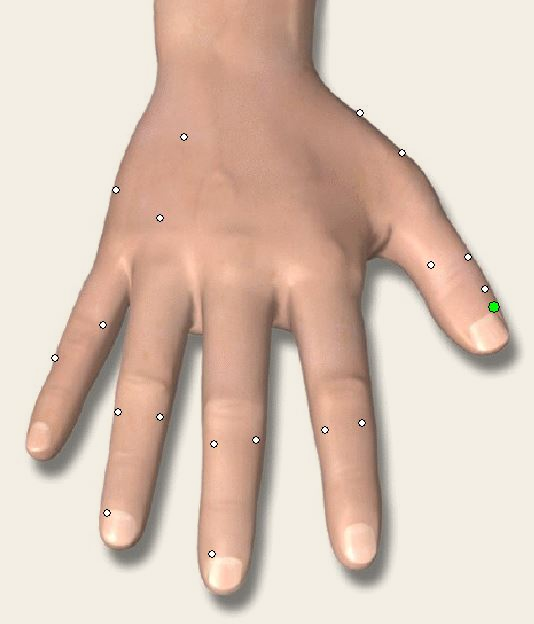
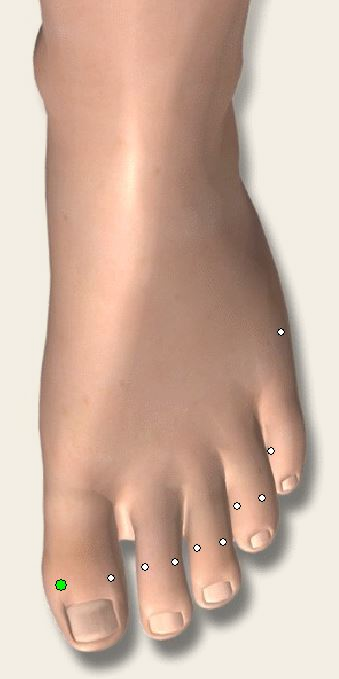
Traditional Chinese medicine describes pathways of energy through the body, and teaches that blockages along those pathways show up as imbalance. Acupuncture and acupressure stimulate certain points to change the flow related to a patient’s symptoms. A Meridian BioScan measures electrical activity at those same kinds of points, including points on the hands and feet.
Galvanic skin response and the IHT BioScan
The instrument I use is an IHT BioScan. It is a galvanic skin response meter. Galvanic skin response, also called electrodermal activity, is a change in how easily a very small electrical current passes through the skin. Moisture at the skin is one thing that changes the reading. Sweat glands, which answer to the part of the nervous system involved in stress, affect that moisture.
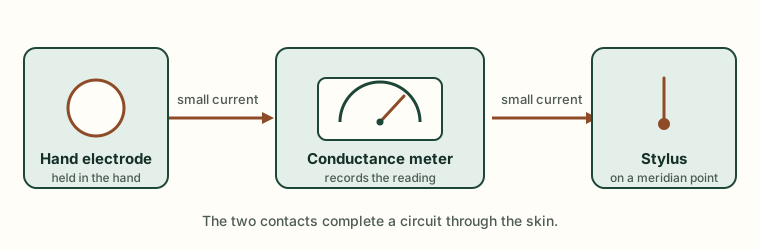
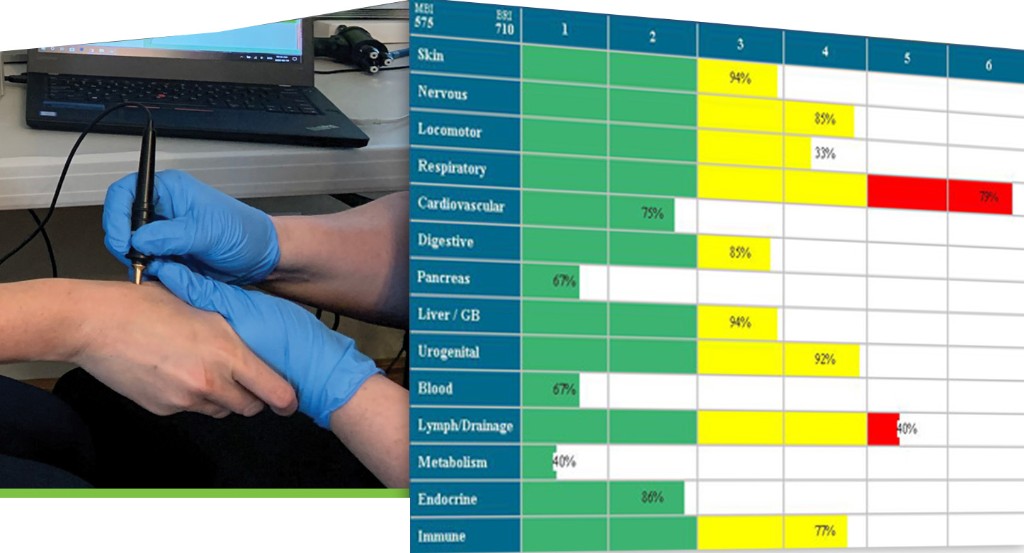
During a scan you hold a hand electrode. I place a stylus on a meridian point. Those two contacts complete a circuit, and the meter records the conductance at that point. The software includes more than 840 programmed points, among them points on the hands, feet, ears, and teeth, grouped along the meridians used in acupuncture. IHT describes the meridian stress assessment on its site.
I read the pattern of those measurements as a sign of where a meridian may be under more stress, or less. The number is a skin reading. It is not a blood test, and it does not by itself show that a point is blocked or inflamed. The procedure is painless.
The BioScan is listed with the FDA as a galvanic skin response measurement device, product code GZO. That listing covers measuring electrical resistance between two electrodes on the skin. It is not a clearance to diagnose a named illness.
Dr. Hans-Heinrich Reckeweg
Hans-Heinrich Reckeweg (1905–1985) was a German physician and the person who set out homotoxicology. He studied medicine in Würzburg, Münster, Berlin, and Bonn, and received his medical degree in Bonn in 1930. In 1936, in Berlin, he founded the company Heel to prepare the homeopathic combination remedies he was using in practice. The name is an abbreviation of the Latin Herba est ex luce, “the plant draws its strength from light.”
Between 1948 and 1949 he wrote out the ideas he called homotoxicology, an attempt to join homeopathy with a view of illness as the body dealing with a toxic load. He later moved Heel to Baden-Baden. In 1979 he moved to Albuquerque, New Mexico, and continued the work there as Biological Homeopathic Industries.
Homotoxicology
Homotoxicology is Reckeweg’s account of illness, not a diagnosis used in conventional medicine. He used the word homotoxin for any substance, from outside the body or produced inside it, that he believed placed a toxic load on a person. In his view, the processes medicine calls disease are the body trying to neutralize that load and move it out. If the body keeps up, the trouble stays near the surface, in excretion or inflammation. If it does not, he taught that the load is stored in the connective tissue and that, later, cells themselves are injured.
He arranged that sequence in six phases. The first two are humoral, meaning the cells themselves are still intact. The middle two concern the matrix, the mesh of connective tissue around the cells. The last two are cellular.
| Phase | Group | What Reckeweg described |
|---|---|---|
| 1. Excretion | Humoral | Ordinary routes of elimination, such as the bowels, urine, sweat, and breath, are more active. |
| 2. Inflammation | Humoral | Inflammation is treated as the body’s way of speeding that removal. |
| 3. Deposition | Matrix | The load is stored in connective tissue. This phase may have few symptoms. |
| 4. Impregnation | Matrix | Past a line he called the biological division. The load is bound into the tissue, and function begins to change. |
| 5. Degeneration | Cellular | Groups of cells in an organ are damaged. |
| 6. Dedifferentiation | Cellular | Cells lose their specialized form. He placed malignant disease at this end of the table. |
He called a shift toward the later phases progressive vicariation, a worsening, and a shift back toward excretion regressive vicariation, which he took as movement toward recovery. The biological division, between deposition and impregnation, was the line where he thought the body stopped being able to clear the load on its own.
The remedies he built for this work are homeopathic combinations, mostly in low to middle potencies, chosen by the phase and the symptoms rather than by one classical single remedy. He meant them to support elimination. They are not a substitute for medical care of a serious disease.
A Meridian BioScan does not detect a homotoxin, and it does not assign one of these phases by itself. I use the conductance pattern as one piece of information when we talk about stress on the meridians and about what to try next. That conversation may include nutrition, which is described on the supplement page.
Who it is for
A BioScan is one way to gather information about organs and other systems. It can flag areas of concern and suggest next steps. It cannot provide an official medical diagnosis. It can still be useful when symptoms seem scattered and hard to explain. Many people repeat the scan from time to time to keep track of changes.
If you are not sure a Meridian BioScan fits your situation, call (239) 763-7016. I am happy to answer questions or schedule a consultation.